
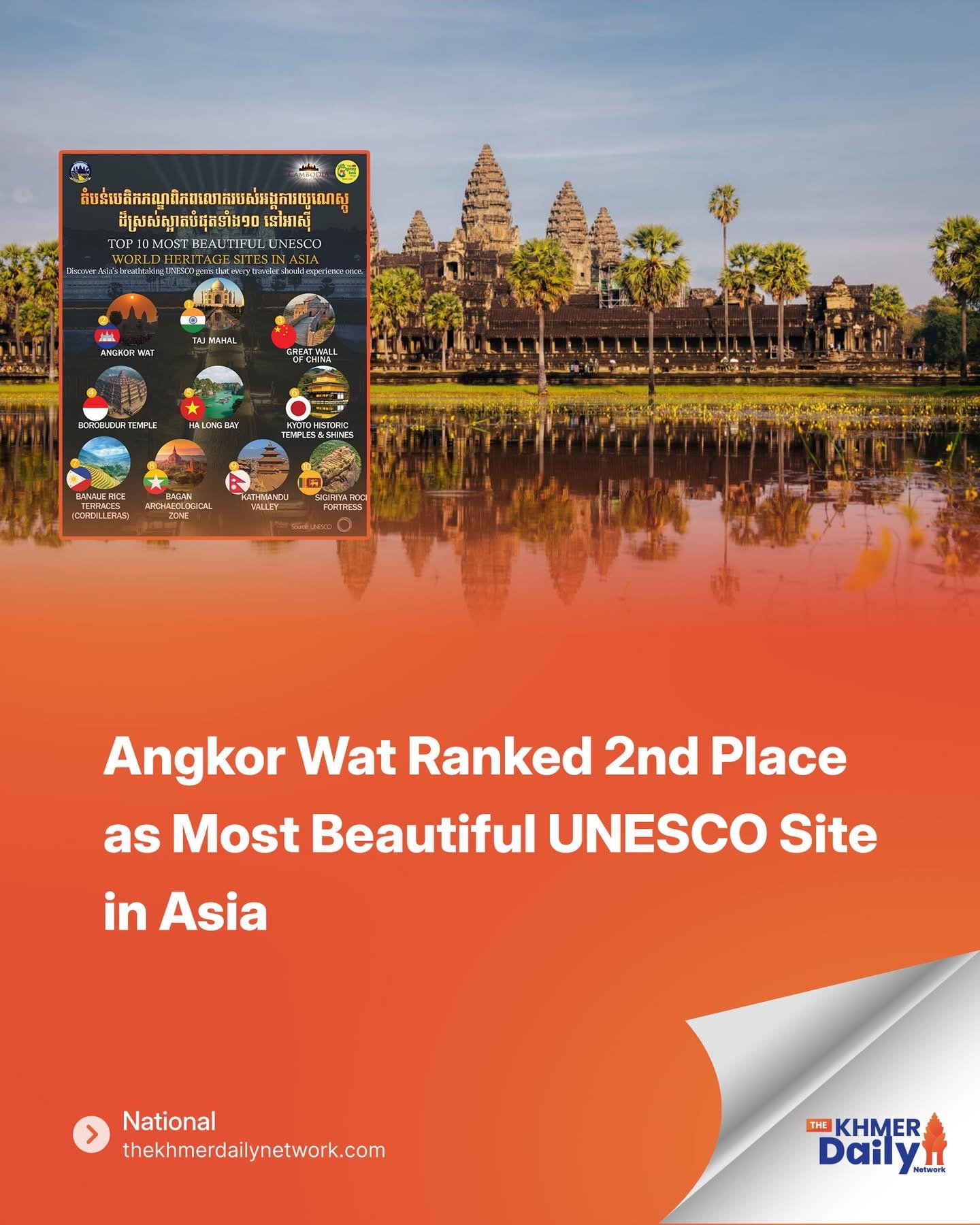
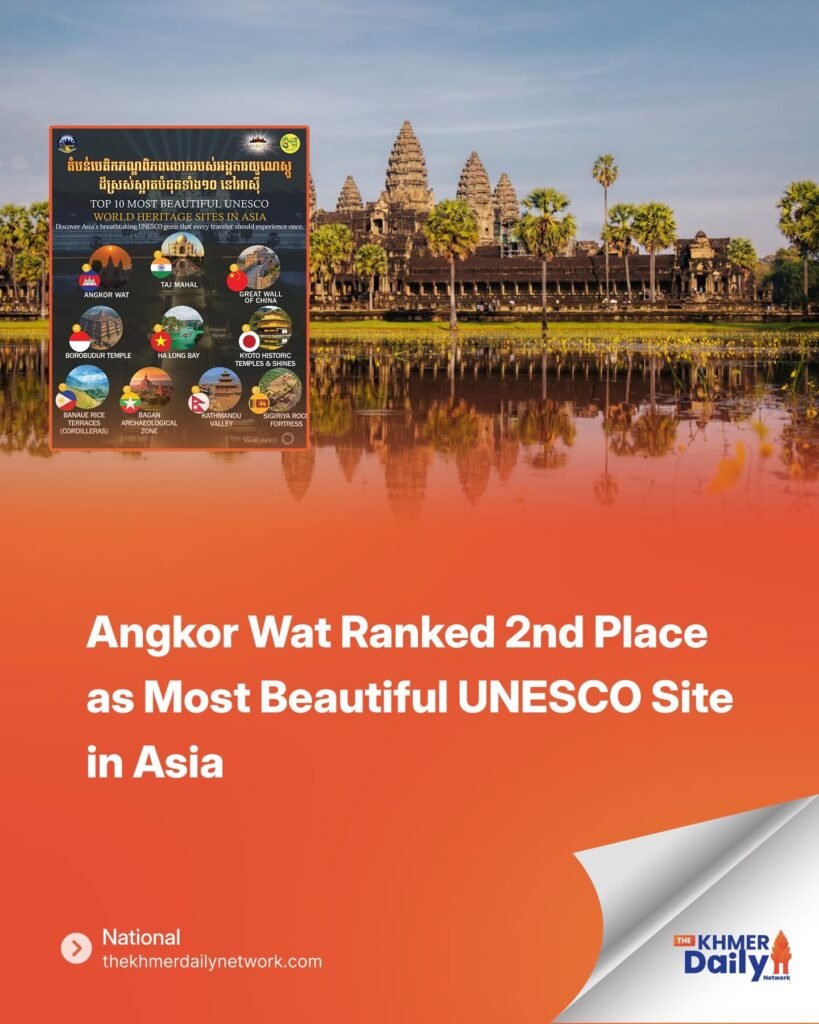
Nestled in the heart of Siem Reap, the legendary Angkor Wat has once again earned global recognition, ranking as the 2nd most beautiful UNESCO World Heritage Site in Asia. The ranking places Cambodia’s iconic temple just behind the world-famous Taj Mahal in India, while the historic Great Wall of China secured third place. Photo by (Khmer Daily Network)
For travelers, photographers, historians, and spiritual seekers alike, this recognition comes as no surprise.
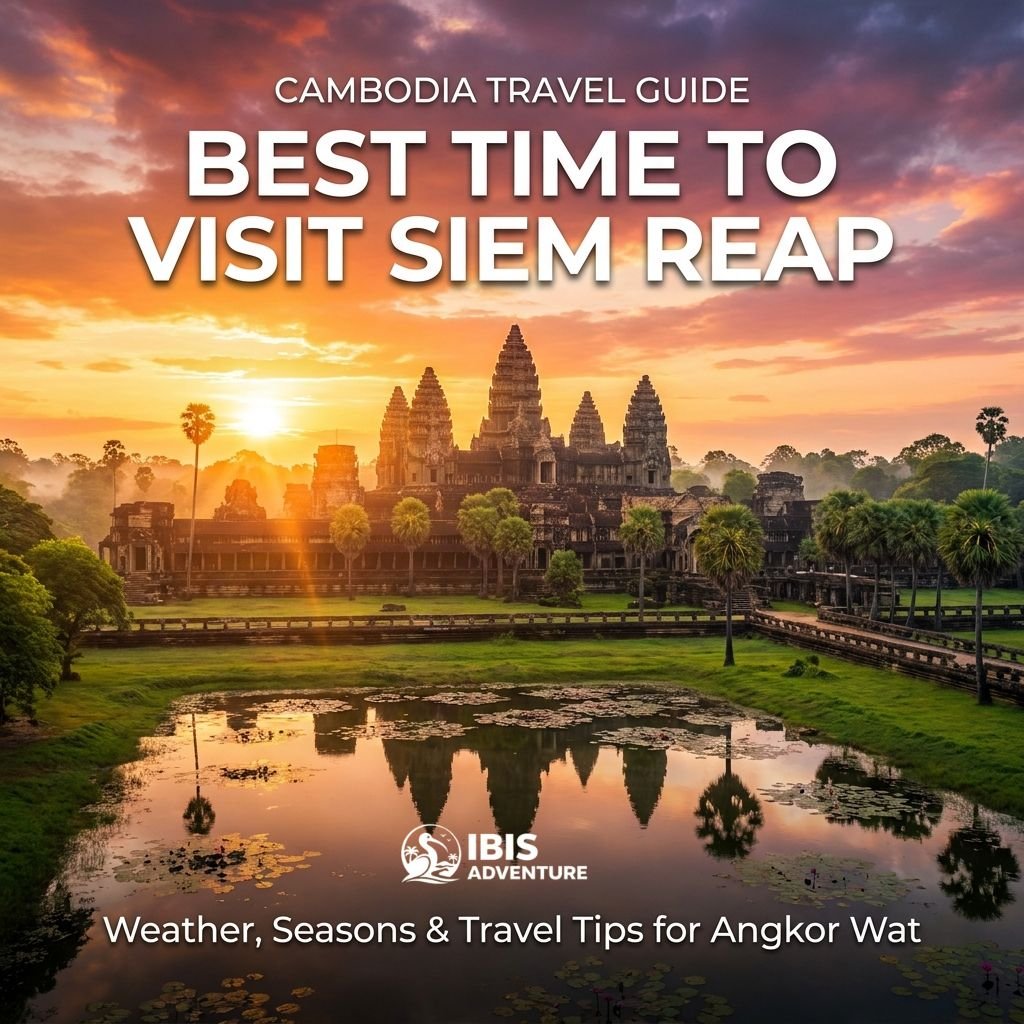
Built during the height of the Khmer Empire, Angkor Wat is more than just a temple — it is a symbol of Cambodian pride, resilience, and cultural identity. Famous for its majestic five lotus-shaped towers, endless galleries of intricate stone carvings, and magical sunrise reflections over the ancient moat, Angkor Wat remains one of the most breathtaking destinations in Asia.
Every year, hundreds of thousands of international visitors travel to Cambodia to witness the beauty of this UNESCO treasure firsthand. From the mystical atmosphere at dawn to the jungle-covered ruins surrounding the complex, Angkor Wat offers an unforgettable experience unlike anywhere else in the world.
What makes the monument even more unique is its national significance. Angkor Wat proudly appears on the Cambodian flag, making Cambodia the only country in the world to feature a monument on its national flag.
Recognized as a UNESCO World Heritage Site since 1992, Angkor Wat continues to stand as the crown jewel of Cambodian tourism. The temple complex not only showcases extraordinary Khmer architecture but also tells the story of one of Southeast Asia’s greatest civilizations.
Visitors exploring the ancient city can discover hidden corridors, sacred bas-reliefs, and centuries-old spiritual traditions still alive today. Combined with Cambodia’s warm hospitality and rich local culture, Angkor Wat remains a bucket-list destination for travelers around the globe.
Whether you are a history enthusiast, adventure traveler, content creator, or cultural explorer, Angkor Wat delivers an experience that feels both timeless and magical.
As global tourism continues to grow in Southeast Asia, Cambodia’s iconic temple proves once again why it deserves a place among the world’s greatest wonders.